
You can’t fight a gas leak the way you fight a fire, because by the time you can smell it, the room may already be close to explosive concentration. LPG pools at floor level, while methane and PNG rise to the ceiling. Carbon monoxide gives no warning at all. The only reliable defence is a system that detects the gas long before a person would, and acts on it.
A gas leak detection system does exactly that. It watches the air continuously, raises the alarm at a fraction of the dangerous level, and can shut off the gas supply and start the exhaust before anyone is at risk.
Zap Fire designs, supplies, installs and maintains gas leak detection systems for commercial kitchens, industrial plants and critical facilities. We’re headquartered in Gurugram and we service clients across India. We’ve done this since 2008, and we look after the whole system, from sensor selection and placement through to the calibration that keeps it accurate year after year.
A gas detection system is more than a row of sensors. It’s a monitored loop that finds the gas, warns the area and shuts the supply off:
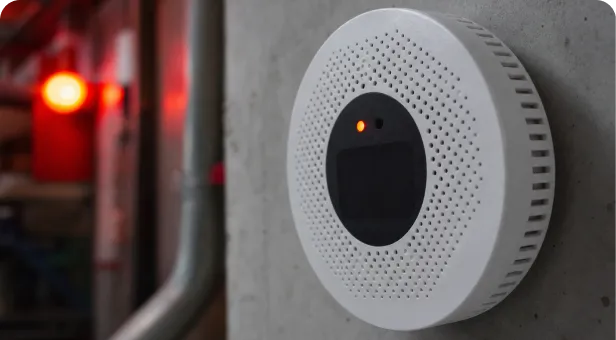
Fixed sensors chosen for the specific gas and risk, using catalytic, electrochemical, infrared or semiconductor sensing.
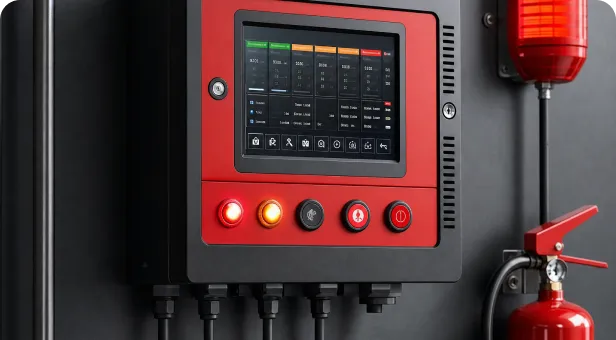
The central panel that reads every detector, shows live concentrations and manages the alarms and outputs.
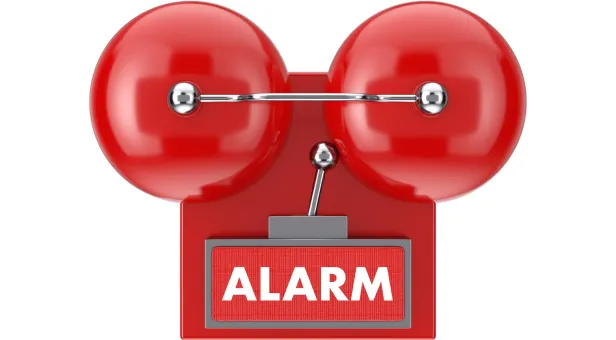
Sounders and beacons that warn the area the moment gas crosses the warning threshold.
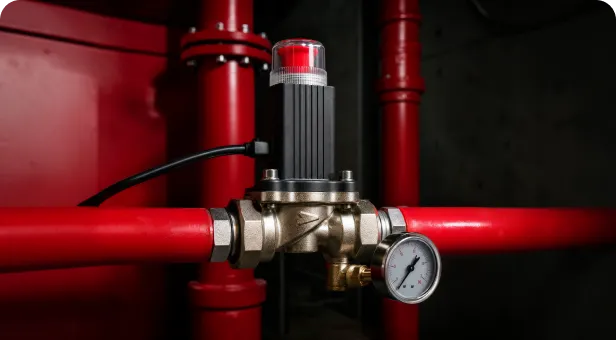
A solenoid valve that cuts the gas supply at the source when the alarm trips, rather than only sounding it.
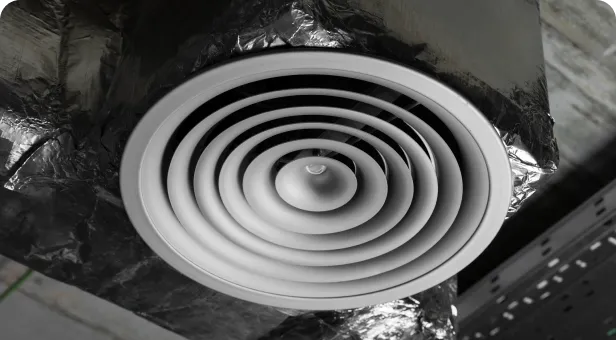
Outputs that start extract fans to clear the gas as it builds.
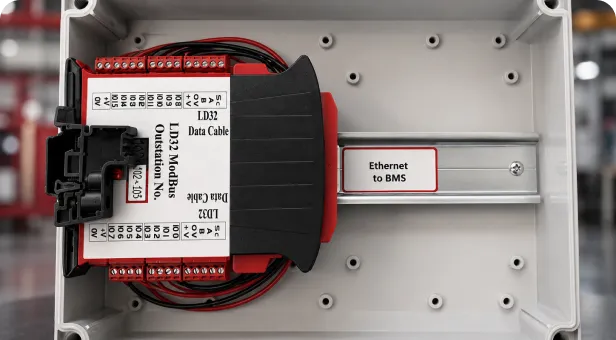
4-20mA, relay and Modbus outputs that tie the system into your BMS and fire alarm.
We select and calibrate detectors for the gas you actually have on site:
LPG, PNG and CNG
Combustible fuel gases in kitchens, boiler rooms and gas banks.
Methane (CH4)
The main risk in biogas, sewage and natural gas handling.
Carbon monoxide (CO)
The silent risk in car parks, generator rooms and combustion spaces.
Hydrogen (H2)
Released by charging batteries in UPS and battery rooms.
Toxic gases
Ammonia, chlorine, hydrogen sulphide and others across industrial and process plants.
Oxygen depletion and VOCs
For confined spaces and process areas where the air itself becomes the hazard.
A gas leak you can’t smell is already dangerous by the time anyone reacts. A Zap Fire system catches it at a fraction of the explosive level, and can cut the supply before it becomes a problem
We deliver the full system and keep it accurate, with our own engineers and technicians at every stage.
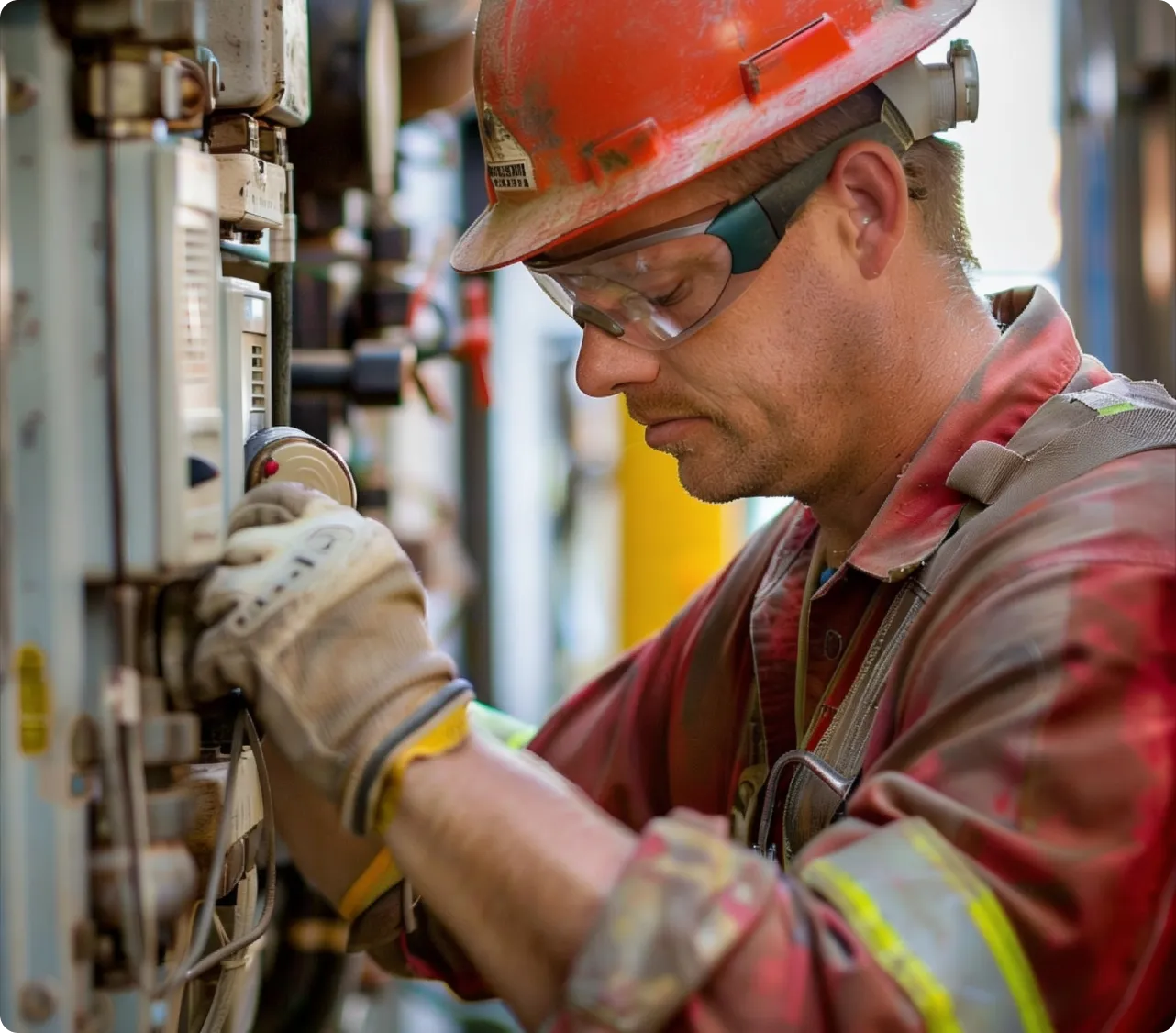
Every gas sensor drifts over time. The catalytic bead in a combustible-gas detector loses sensitivity and electrochemical cells age, and a detector that reads low is more dangerous than no detector at all, because it tells you the air is safe when it isn’t. The only way to know a sensor still reads true is to test it against a known gas.
We calibrate every sensor on a schedule, using traceable calibration gas, and we log the result. A detector that can’t be brought back into range is replaced, not nursed along. A bump test confirms the sensor still responds to gas, while a full calibration confirms it responds at the right level, and we do both on the cycle your sensors and environment demand. This is the single most important thing you can do for a gas detection system, and it’s the first thing a serious safety audit checks.
An uncalibrated gas detector gives you false confidence, which is worse than no detector at all. A Zap Fire AMC calibrates every sensor on schedule against traceable gas, with the records to prove it
Gas detection sits in hazardous and regulated environments, and we work to the standards that govern them:
Designing and maintaining to these is what stands behind your Fire NOC, your insurance and your statutory safety inspections.
We design, calibrate and maintain gas detection for clients across India, in places such as:
Commercial and industrial kitchens
Hotels, restaurants
and food courts
Boiler rooms and
gas banks
Car parks and basements, for carbon monoxide
UPS and battery
rooms, for hydrogen
Industrial and
process plants
Oil, gas and petrochemical facilities
Laboratories and confined spaces
Anyone can sell you a gas detector. Keeping it accurate, and making it actually do something when it trips, is the part that matters. Here’s what you get with us:
We supply the detection, the alarm, the shut-off and the integration as one working loop.
Scheduled, traceable calibration is built into every AMC, not left as an afterthought.
Flameproof detectors rated for the hazardous areas they sit in.
The people who size and place the detectors are the people who
Every calibration, bump test and inspection logged and ready.
Turnkey fire and gas safety delivered across India.
If a gas leak where you work would put lives at risk, don’t trust a detector nobody has calibrated. Let Zap Fire build it and keep it calibrated.