
Tube-Based Fire Suppression Systems
Most electrical fires don’t start in the open. They start inside a panel, behind a closed door, in a loose connection or an overloaded busbar, and they’re well established before anyone in the building smells smoke. By the time a room-flooding system or a sprinkler reacts, the panel is already gone, and often the fire has spread past it.
A tube-based fire suppression system fixes that by sitting inside the enclosure itself. It detects and puts out the fire at the exact point it starts, in seconds, with no power supply and nobody in the room.
Zap Fire designs, supplies, installs and maintains tube-based suppression for electrical panels, machinery and critical enclosures, including KANEX systems. We’re headquartered in Gurugram and we service clients across India. We’ve done this since 2008, and we cover the whole job, from sizing the agent to the enclosure through to the annual pressure checks that keep it ready.
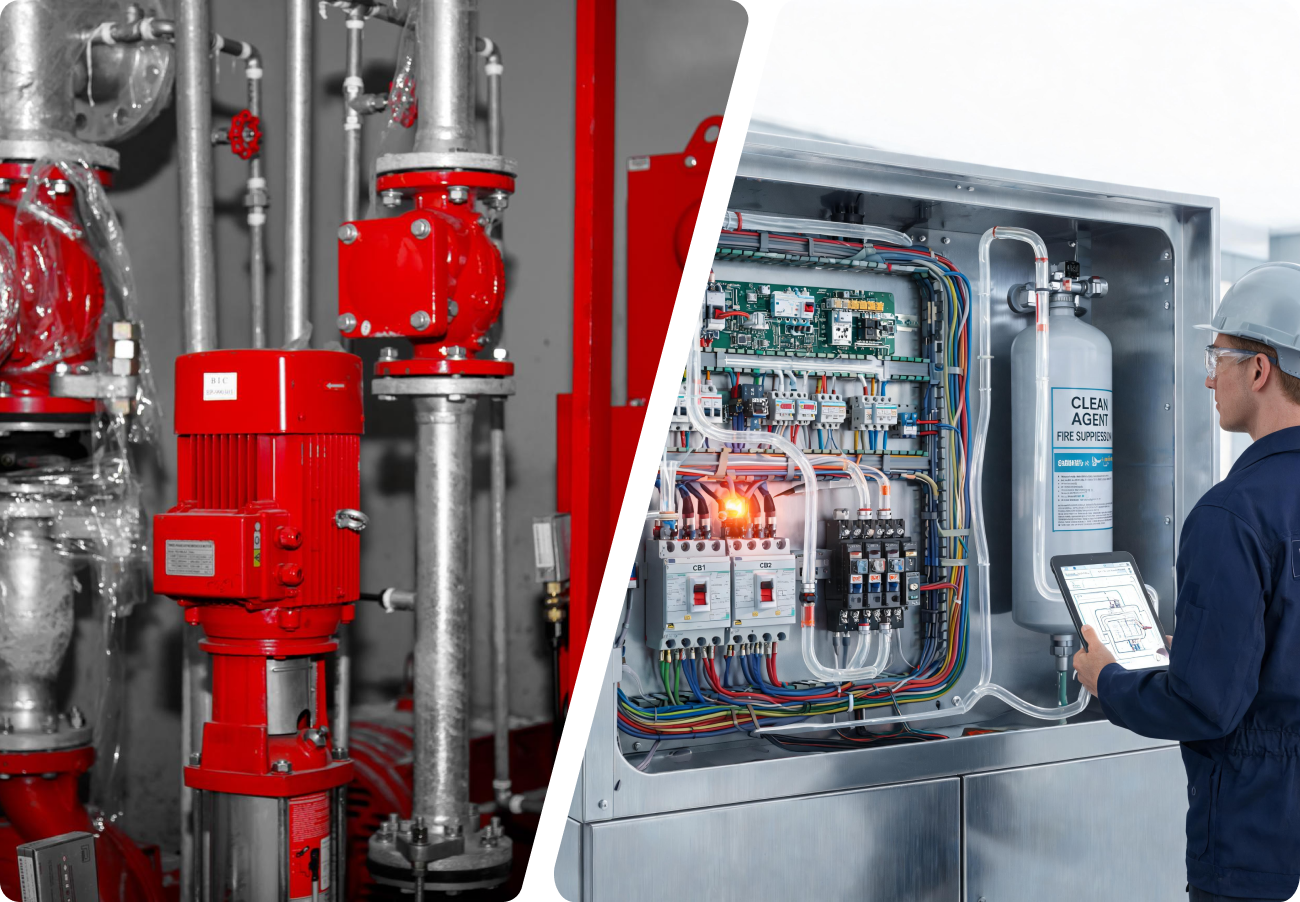
How a tube-based system works
At the heart of the system is a heat-sensitive polymer tube, run through the inside of the enclosure and pressurised with the extinguishing agent or with nitrogen. The tube is the detector. When a fire pushes the temperature to around 110 to 180 degrees Celsius, the tube bursts at the single hottest point, which is exactly where the fire is.
That burst either releases the agent straight through the tube onto the fire, or signals the cylinder valve to discharge through fixed nozzles. Either way it happens on its own, with no electrical supply and no human action. The agent is a non-conductive clean gas or CO2, so it puts the fire out without harming the equipment around it.
Because the tube reacts to the heat of the fire itself rather than to smoke drifting up to a ceiling detector, it acts far earlier than a room system ever could. The fire is caught inside the enclosure, often before it trips a breaker, and the equipment around it never feels the effect.
Direct and indirect systems
There are two ways to configure the system, depending on the size of what you’re protecting:
We pick the configuration around the enclosure, then size the cylinder to its volume. A single control panel might need a short run of tube and a small cylinder, while a CNC machine or a switchroom needs nozzles and a larger charge. We size both to the space rather than to a standard kit.
Direct
The tube is both the detector and the nozzle. It bursts and discharges the agent right at the hot spot. Compact, and ideal for small enclosures like a single electrical panel or a control cabinet.
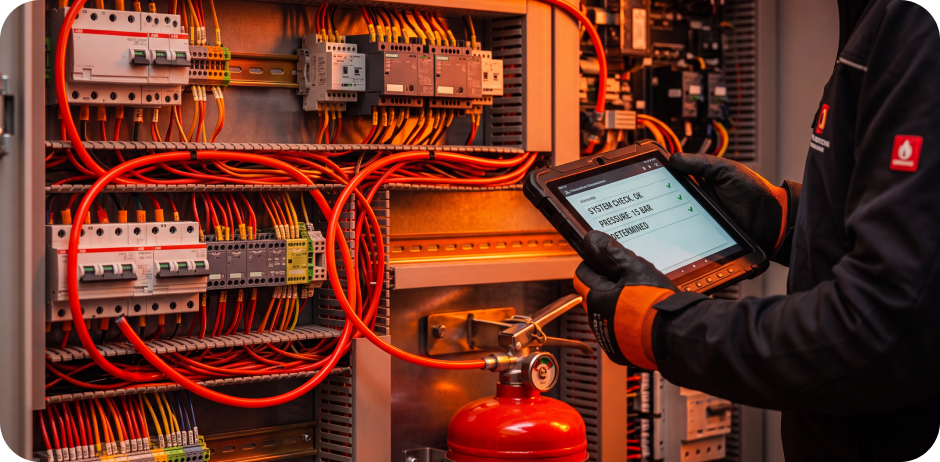
Indirect
The tube detects and triggers the cylinder, which discharges through separate nozzles to flood the whole enclosure. Suited to larger spaces like a big switchroom, a CNC machine or a generator canopy.
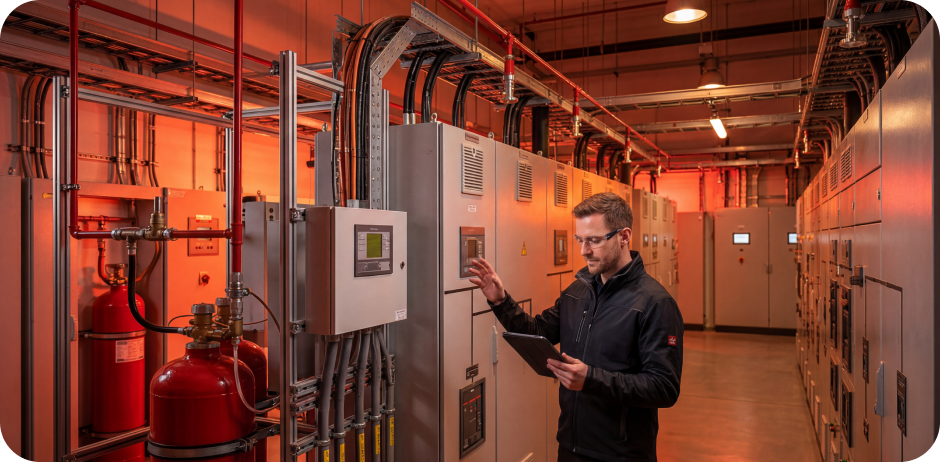
Most electrical fires start inside a panel, in the dark, with nobody watching. A tube-based system fights it there, the second it starts. Let Zap Fire fit one to your panels
The agents we use
We build the system around the agent that suits the risk and the equipment: Water and dry powder have no place inside live equipment, which is why we stay with clean agents and CO2 for these enclosures.
NOVEC 1230 (FK-5-1-12)
A clean agent that knocks the fire down fast and leaves no residue, safe for live electronics.
FM-200 (HFC-227ea)
A compact halocarbon clean agent for fast suppression inside tight enclosures.
CO2
A cost-effective option for unoccupied enclosures, putting the fire out by removing oxygen.
Services we provide
Tube-based suppression is precise, low-fuss protection, and we cover every stage of it with our own technicians.
A panel without suppression is a fire waiting for a power cut. Zap Fire fits and maintains tube-based systems that don’t need power to do their job
Built to recognised standards
These systems are governed by recognised fire and product standards, and we install to them:
- NBC 2016, Part 4.The national fire and life safety code, which calls for automatic suppression in critical electrical enclosures.
- NFPA 2001 The clean agent standard covering the FK-5-1-12 and HFC-227ea agents we use.
- UL listing and FM approval. The detection tube and components we fit carry international listings.
- IS 1646.The Indian code for fire safety of electrical installations, which these systems directly support.
Designing to these matters for your Fire NOC, and for the insurance cover and equipment warranties that increasingly expect panel protection. For defence, power and export projects, we supply UL-listed and FM-approved components to match the tender.
Where we install tube-based suppression
We fit and maintain tube-based systems for clients across India, protecting:
LT, HT, MCC and PCC electrical panels
VFD, PLC and control cabinets
Switchgear and substation rooms
Server racks and data cabinets
UPS and battery banks
CNC machines and machinery enclosures
Generator and DG canopies
Wind turbine nacelles
Why building owners choose Zap Fire
The point of this system is to stop a fire before it ever becomes the building’s problem. That only works if it’s specified and maintained properly. Here’s what you get with us:
Protection at the source
We put the system where the fire starts, inside the enclosure, not just in the room around it, where it would already be too late.
Works without power.
The tube needs no electricity, so it protects you through the power cut a fault often causes.
KANEX and clean-agent systems
UL-listed tube and non-conductive agents that don't harm your equipment.
One team from design to AMC
The people who fit it are the people who maintain it.
ERP-tracked service.
Every pressure check and inspection logged and ready.
A partner since 2008
Turnkey fire protection delivered across India.
Frequently asked questions
Talk to Zap Fire
Get a Comprehensive Site Survey
- ( +91 97173 04877)
- 0124 4931885
- info@zapfire.org / amit@zapfire.org
Your switchgear runs your building. Protect it at the source, before a fault becomes a fire