
Water leak detection systems

Water and a data hall don’t mix, and the leaks that do the damage are the ones nobody sees. A dripping condensate tray or a cracked chilled-water pipe under the raised floor can run for hours before anyone notices, and by the time the water reaches a rack or a power distribution unit, you’re facing downtime rather than a mop and a bucket.

A water leak detection system catches that leak the moment it starts, anywhere across the floor, and tells you exactly where it is so you can stop it before it spreads.


Zap Fire designs, supplies, installs and maintains water leak detection systems for data centres, server rooms and critical facilities. We’re headquartered in Gurugram and we service clients across India. We’ve done this since 2008, and we handle the whole system, from the sensor layout through to its link into your building management system.
How water leak detection works

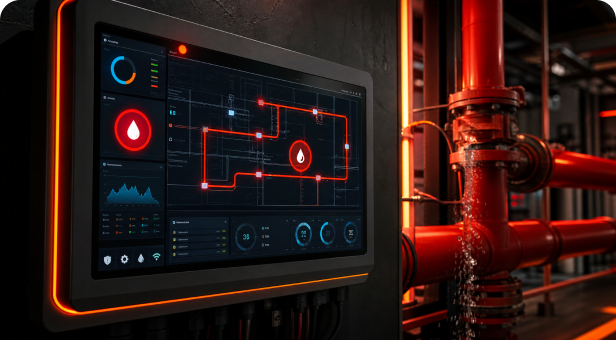
The system detects conductive liquid the instant it touches a sensor, and there are two ways to do that. Most sites use a mix of both.

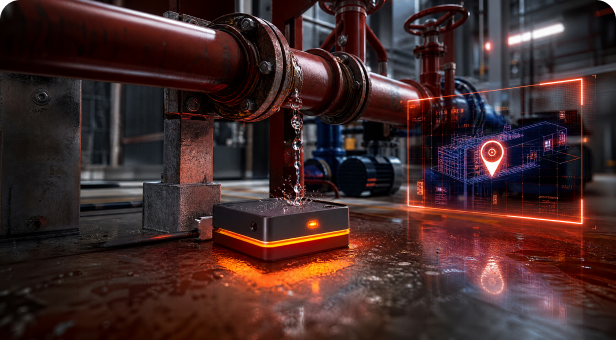
A point sensor, or probe, sits at a specific low spot, under an AC unit or in a drain pan, and alarms when water pools there. A sensing cable runs in a line along the area you want to watch, under the raised floor, around the CRAC units or along a pipe run, and detects a leak anywhere on its length. It reads water and water-glycol coolant alike, which matters around chilled-water and CRAC systems. The better systems do more than alarm: a distance-locating panel reads how far along the cable the water is and reports the leak’s position in metres.

What a leak detection system includes

A leak detection system is a sensing network and a monitoring panel working together:

Leak detection panel

The control and display unit that monitors every sensor and shows the alarm, and on a locating panel, the distance to the leak.

Sensing cable

Conductive-liquid sensing cable that detects a leak anywhere along its run, laid under raised floors and around equipment.
Point sensors

Spot probes for specific low points, drain pans and known risk spots.

Leader cable and interface modules

Non-sensing cable and modules that connect the sensors back to the panel.
Alarm sounders

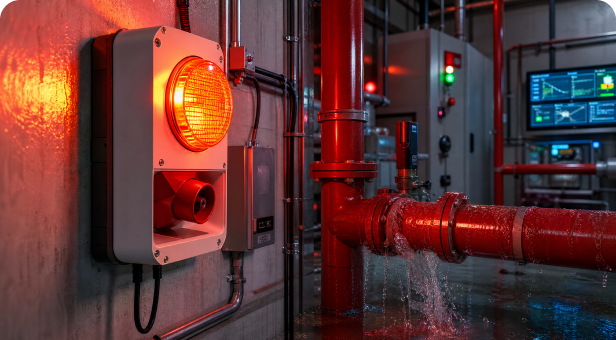
Audible and visual alarms that flag a leak locally as well as on the panel.

BMS integration

Modbus, relay and network outputs that put the leak straight onto your building management system.

Why the pipe design decides everything

In a large data hall, knowing there’s water somewhere under the floor is only half a solution. The other half is knowing where, before it spreads. A distance-locating system reads the leak’s position along the sensing cable to within about a metre and shows it on the panel, often on a map of your floor.

Your team lifts one tile, not fifty, and stops the leak while it’s still small. Without locating, a leak alarm sends your team crawling the floor while the water keeps spreading, which is the worst of both worlds: you know there’s a problem and you can’t reach it. That gap, minutes versus hours, is the whole point of the system.

A leak under your raised floor doesn’t announce itself. By the time it reaches a rack or a PDU, you’re looking at downtime, not a mop. Zap Fire puts in detection that finds it in seconds.

Services we provide

We deliver the full system and keep it reliable, with our own engineers and technicians at every stage.
Design and engineering
Sensor layout and cable routing mapped to your risk points and raised-floor plan, as drawings.
Supply and procurement
Panels, sensing cable, point sensors and interface modules from established makes.
Installation and execution
Cable laid under the floor and around equipment, with the panel and sensors fitted by trained technicians.
Testing and commissioning
Live leak simulation, alarm and distance-read verification, and a BMS communication test before handover.
Programming and integration
Zone and address mapping, alarm logic, a clear leak map of your floor on the panel, and integration with your BMS over Modbus or a relay link.
Retrofitting and modernisation
Adding detection to a live data hall during a planned shutdown so the room keeps running, or upgrading an old zone system to a distance-locating one.
Preventive maintenance
Scheduled cable inspection, sensor checks and live leak tests that confirm it still reads and locates.
Breakdown maintenance
Quick repair when a cable, sensor or panel develops a fault.
Annual maintenance contracts (AMC)
Comprehensive and non-comprehensive AMCs with scheduled testing and BMS-link checks.
Training and demonstrations
Hands-on training so your team can read the panel and respond to a leak fast.
Inspection and system health audits
Independent audits of cable condition, coverage and locating accuracy.

Built for integration and uptime

Water leak detection isn’t a Fire NOC item, it’s an uptime one, and it earns its place by talking to the systems that run your building. We integrate every system into your BMS over Modbus, a network link or volt-free relays, so a leak shows up on the same screen your team already watches, day and night.

We follow data-centre practice for raised-floor coverage, lay the cable so it catches water at the low points first, and use AC-signal sensing cable that resists corrosion and shrugs off false alarms from dust or condensation. Where the risk justifies it, we can add an automatic shut-off valve that closes the water supply when a leak is detected, rather than only raising an alarm. The aim is simple: the earliest possible warning, in the place you’ll actually see it.

A leak sensing cable nobody has tested in two years is a guess, not a safeguard. A Zap Fire AMC tests the sensing cable and verifies the BMS link on schedule, so it works the day you need it.

Where we install leak detection

We design and maintain water leak detection for clients across India, in spaces such as:

Data centres and server rooms

UPS and battery rooms

Telecom and network facilities

Electrical and switch rooms

Raised-floor and false-floor voids

Basements and plant rooms

Laboratories and clean rooms

Archives and record storage

Why facility managers choose Zap Fire

A leak detection system is only worth having if it warns you early and points you to the problem. That’s what we build. Here’s what you get with us:

Detection that locates

We fit distance-locating systems that point you to the leak, not just tell you there is one.

BMS integration as standard

Modbus and network links, so the leak reaches your team the moment it starts.

Coverage where you can't see

Under raised floors, behind racks and along pipe runs.

One team from design to AMC

The people who lay the cable are the people who test it.

ERP-tracked service

Every leak test, cable check and inspection logged and ready.

A partner since 2008

Turnkey detection and protection delivered across India.

Frequently asked questions

1
Point sensors or a sensing cable, which do I need?
Often both. Point sensors guard specific low spots like drain pans, while a sensing cable watches whole areas under the raised floor and around equipment. We design the mix around your risk points.
2
Can the system tell me where the leak is?
A distance-locating system can, reading the position along the cable to within about a metre and showing it on the panel, so you go straight to the leak instead of searching the floor.
3
Will it connect to our BMS?
Yes. We integrate over Modbus or a relay link, so leaks appear on the BMS your team already monitors, around the clock.
4
Does the sensing cable need maintenance?
It does. Cable gets disturbed or moved during floor work, so scheduled inspection and live leak tests are what keep it reliable. We build that into the AMC.

Talk to Zap Fire

Get a Comprehensive Site Survey

The cost of a leak in a data hall isn’t the water, it’s the hours of downtime that follow. Let Zap Fire design and maintain detection that buys those hours back.

Send a Message

Send a Message