
Seismic bracing systems

When people picture earthquake damage, they picture cracked walls and collapsed floors. They rarely picture what’s hanging above their heads. The firefighting pipes, HVAC ducts, cable trays and suspended equipment running through every commercial building are heavy and rigid, and in most older buildings they’re held up by nothing more than gravity and a few rods. In a quake they swing and tear loose, and what comes down does as much harm as the structure itself. After an earthquake, more than half of building-related losses come from these non-structural failures, not from the structure giving way.

For a fire protection system, that’s the worst possible failure. A post-earthquake fire is one of the most common secondary hazards there is, started by ruptured gas lines and damaged wiring, and it meets a sprinkler network whose pipes have just cracked apart. The system designed to save the building can’t deliver a drop.

Seismic bracing stops that. It’s the engineered restraint that holds your building services in place through the shaking, so the pipes stay joined and the fire protection still works when you need it most. Zap Fire engineers and installs seismic bracing for firefighting and building services across India. We’re headquartered in Gurugram, we work with clients nationwide, and we’ve done this since 2008.

Why it matters most for fire protection

Every building service deserves bracing, but the fire-protection pipework is the one you cannot afford to lose. The sequence is brutally simple. An earthquake ruptures a gas line or shorts a cable and starts a fire. The same earthquake has already cracked the sprinkler and hydrant pipes that were meant to put that fire out. Now you have a fire, no working suppression, and a building full of people trying to leave. Bracing the fire system to code is what breaks that chain. It keeps the pipes intact and pressurised through the shaking, so the protection you paid for is still standing when the fire starts.

What seismic bracing protects

Seismic bracing isn’t one product. It’s a set of engineered restraints fitted to everything that hangs from or runs along your structure:

Firefighting pipework

Sprinkler, hydrant and wet-riser lines, the pipes that have to survive the earthquake to fight the fire that follows.

HVAC ducts and equipment

Ductwork, air handling units and suspended units that would otherwise fall or shear at the joints.

Cable trays and conduit

The electrical and data routes that carry power and control around the building.

Plumbing and gas lines

Water and fuel lines whose failure causes flooding or, worse, a fresh fire source.

Suspended equipment

Heavy ceiling-mounted plant that becomes a falling hazard without restraint.

The main types of seismic bracing

We use the right restraint for each run and each load
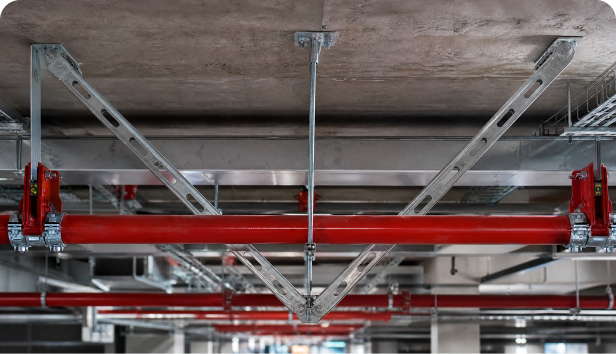
Lateral bracing

Restrains side-to-side movement across the pipe or duct.
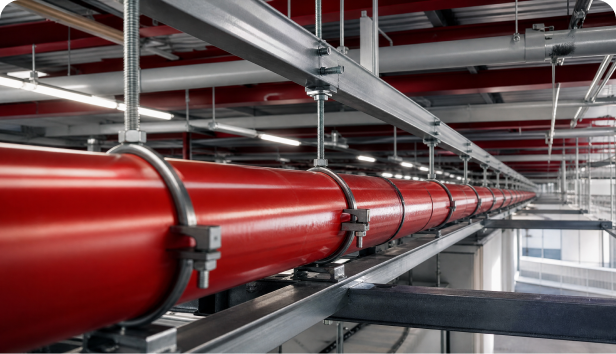
Longitudinal bracing

Restrains movement along the length of the run.
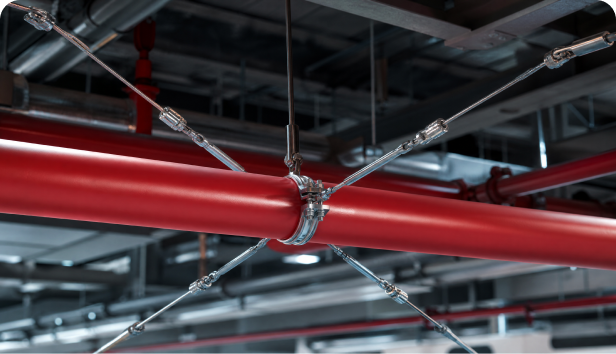
Sway bracing

Cable or rigid strut bracing that limits swing, with four-way bracing where the load needs it.
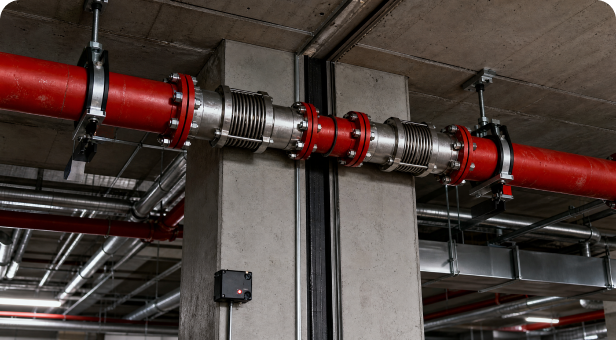
Flexible couplings and seismic joints

Allow controlled movement where services cross building expansion joints, so they flex instead of snapping.
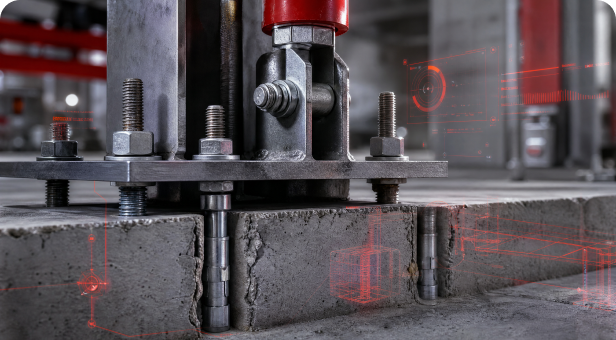
Anchors and fasteners

The engineered fixings that tie it all back to sound structure. Lag bolts and screws don't qualify, and we don't use them.

An earthquake doesn’t just shake the building, it tests every pipe and duct you never braced. If your sprinkler lines fail in the shaking, your fire protection fails with them. Let Zap Fire brace them before it’s tested for you.

The engineering behind it

Seismic bracing isn’t an off-the-shelf kit you bolt on by eye. The brace type and its spacing depend on the weight of the water-filled service, the span it covers and the seismic zone your building sits in, plus the structure it’s anchored to. Get the spacing too wide or the anchor too weak and the brace fails before the pipe does, which is no protection at all.
We run the seismic load calculations to IS 1893 and NFPA 13, use the zone-of-influence method to place lateral and longitudinal braces at the right intervals, and design anchors that hold in the structure you actually have. The result is bracing engineered for your building, not guessed.

Services we provide

Seismic bracing is a design and installation discipline, and we cover it end to end with our own engineers:

Most older buildings have services that would whip loose in a moderate quake, and nobody has ever checked. Zap Fire audits what you have against IS 1893 and tells you straight where you stand.

Design and engineering
Seismic load calculations, brace type and spacing, and anchor design to IS 1893 and NFPA 13.
Supply and procurement
Braces, struts, clamps, anchors and flexible couplings from established makes.
Installation and execution
Bracing fitted to your pipework, ducts and trays and anchored to sound structure by trained crews.
Retrofitting and modernisation
Adding seismic bracing to existing, unbraced services, which is the most common job we do.
Inspection and system health audits
Surveying existing bracing and anchors and reporting the gaps against code.
Compliance and certification support
Calculations, drawings and sign-off for your fire and structural approvals.

Built to seismic codes

Much of India sits in moderate to high seismic zones, and the codes treat building-service bracing as a requirement, not an option. We design and install to:
Designing to these is what stands behind your structural sign-off and the fire-system approval that depends on it.

Where seismic bracing is needed

Bracing matters most in the buildings that have to keep working after a quake, and in the zones where one is likely:

High-rise residential and commercial towers

Hospitals and healthcare facilities

Data centres and telecom facilities

Industrial plants and warehouses

Hotels, malls and public buildings

Schools, colleges and hostels

Any building in seismic zones 3, 4 and 5

Why building owners choose Zap Fire

Seismic bracing is invisible until the day it earns its place, and on that day the engineering is all that counts. Here’s what you get with us:

Engineering-led, not bolt-on

We calculate the loads and design the bracing, rather than fitting a generic kit.

Fire-system focused

We come from fire protection, so we treat the sprinkler and hydrant pipework as the priority it is.

Retrofit specialists

Most of our work is bracing services that were never braced, with minimal disruption to the building.

Code and certification handled

We produce the calculations and drawings your approvals need.

One team, design to sign-off

The people who engineer the bracing are the people who install and certify it.

A partner since 2008

Turnkey fire and life safety delivered across India.

Frequently asked questions

1
Why does fire pipework need seismic bracing specifically?
Because a post-earthquake fire is common, and an unbraced sprinkler or hydrant line cracks in the same quake that starts the fire. Bracing keeps the pipes intact so the fire system still works when it's needed.
2
Do I need it if my building is new?
If your building is in a seismic zone, the codes require bracing of services, and a new building should already have it designed in. We can verify it was done correctly and fill any gaps.
3
Can you brace services in an existing building?
Yes, and that's most of what we do. We survey the existing services, calculate what's needed and retrofit the bracing with minimal disruption to the running building.
4
Does seismic bracing need maintenance?
It's a passive, fitted system, so it doesn't need servicing the way an active system does. It does need an inspection after any major event or building change, to confirm the anchors and braces are still sound.

Talk to Zap Fire

Get a Comprehensive Site Survey

Seismic bracing is the kind of work you only regret skipping once. Let Zap Fire engineer it and install it to code, before the next quake does the checking.

Send a Message

Send a Message